Wednesday, December 2, 2009
GST on poppies
Saturday, November 7, 2009
Sociology of climate denialism
Local climate denier, G.F. Millar writes:
Re: Gwynne Dyer's "History will repeat itself," Nov. 2.
So the bad news is coming fast, according to the intrepid Mr. Dyer. Last year the "bad news" was: CO2 had reached the tipping point at 350 ppm, (head for the hills!). This year it seems we can live with 450 ppm. Can't wait for 2010.
In 1975, the NAS "experts" exhibited the same hysterical fears -- this time, however, asserting a "finite possibility that a serious worldwide cooling would befall the Earth within the next 100 years."
In The Cooling: Has the Next Ice Age Already Begun? Can We Survive It?, published in 1975 by Prentice-Hall, its author, Lowell Ponte, captured the then prevailing mood: "The NAS report was shocking, for it represented a warning from some of the world's most conservative scientists that an Ice Age, beginning in the near future ... was not impossible." Contending that we may be on the brink of a (100,000 year) period of colder climate, the NAS urged an immediate near quadrupling of funds for research. "We simply cannot afford to be unprepared for either a natural or man-made climate catastrophe."
Mr. Ponte lectured the public: "Global cooling presents humankind with the most important social, political, and adaptive challenge we have had to deal with for 110,000 years. Your stake in the decisions we make concerning it is of ultimate importance: the survival of ourselves, our children, our species."
Any of this sound familiar?
This is basically a cut and paste job (with some little changes for exaggeration) a May 1998 (!) letter to the editor of right-wing newspaper, the Washington Times, by noted climate change denier, S. Fred Singer.
He writes:
But this exaggerated concern about global warming contrasts sharply with an earlier NAS/NRC report, "Understanding Climate Change: A Program for Action." There, in 1975, the NAS "experts" exhibited the same hysterical fears—-this time, however, asserting a "finite possibility that a serious worldwide cooling could befall the Earth within the next 100 years."
The 1975 NAS panel claimed to have good reason for their fears: Global temperatures had been in steady decline since the 1940s. They considered the preceding period of warming, between 1860 and 1940, as "unusual," following as it did the "Little Ice Age," which had lasted from 1430 to 1850.
In "The Cooling: Has the next ice age already begun? Can we survive it?", published in 1975 by Prentice--Hall, its author Lowell Ponte captures the then prevailing mood: "The NAS report was shocking, for it represented a warning from some of the world's most conservative scientists that an Ice Age beginning in the near future . . . was not impossible." Contending that we may be "on the brink of a [10,000 year] period of colder climate," the NAS urged an immediate near-quadrupling of funds for research. "We simply cannot afford to be unprepared for either a natural or man-made climatic catastrophe [of global cooling]."
At about the: same time, as Mr. Ponte relates, a group of "leading climatologists," meeting in Bonn, Germany, warned that "the facts of the present climate change are such that the most optimistic experts would assign near-certainty to major crop failures within a decade [because of global cooling]. If national and international policies do not take these near-certain failures into account, they win result in mass deaths by starvation and probably in anarchy and violence that could exact a still more terrible toll . . . ."
By 1975, the climate had indeed been cooling for about 35 years and many scientists were becoming increasingly convinced that another Ice Age was imminent. These experts included climatologist Stephen H. Schneider, who later demonstrated his intellectual flexibility by becoming one of the strongest proponents of global warming. Lester R. Brown, head of the Worldwatch Institute, was then a major enthusiast for cooling, crop failures and famine. Whether freeze or fry, he is still predicting global famine.
Mr. Ponte's book claims that "since 1970, half a million human beings in Northern Africa and Asia have starved because of floods and droughts caused by the cooling climate. . . .In the continental United States severe floods have destroyed billions of dollars' worth of property in the Mississippi Basin, the Great Lakes region, Pennsylvania and New Jersey. . . . Parts of the nation were hit with what the National Weather Service called 'record cold.'. . . Rain and floods described as 'the worst in a century' struck large areas of Washington state."
In Europe, the 1960s were years of unusual cold, but the "odd warmth" of the 1970s was also considered a feature of global cooling. Warned British climatologist Hubert H. Lamb, "Like chills and fever, these are an signs of a planet catching climatic cold."
Mr. Ponte lectures the public: "Global cooling presents humankind with the most important social, political and adaptive challenge we have had to deal with for 10,000 years. Your stake in the decisions we make concerning it is of ultimate importance: the survival of ourselves, our children, our species."
Any of this sound familiar?
I've marked the places where they diverge with a different colour. Mr. Millar, it appears, wasn't satisfied with the misinformation of Fred Singer. He had to make up some more with his little changes. His changing "could" to "would" and round brackets to square brackets are pretty significant changes.I wonder how much of global warming denialism is really just copying and pasting of old S. Fred Singer stuff that has been thoroughly debunked.
As for the question of global cooling "hysteria", it is well documented that
in the 1970's only the popular press was pushing the notion of an imminent
ice age. Climate scientists were not. The 1975 National Academy of Sciences
report, that Millar refers to, simply says that scientists of the time did not
think they had a good quantitative understanding of the earth's climate.
They could not predict how the climate would change in the future and
therefore they had to admit a finite (a technical term used by scientists to
mean non-infinitesimal, that is, non-zero) probability of global cooling -
and lots of other possibilities.
Nowadays we do have climate models and immensely better historical climate
data to check them against. These models all show that, unless some serious
changes take place, we are headed for a hotter earth.

Sunday, October 18, 2009
Must see video on ocean acidification
Wednesday, September 30, 2009
M. Coderre is not really the problem
Wednesday, September 9, 2009
The Iraqi who is "perhaps the greatest value creator Norway has had"
So this article in the Financial Times entitled, "The Iraqi Who Saved Norway From Oil" , pointed out to me by a friend, is wonderfully consistent with my own little experience. It's the story of Farouk al-Kasim, an Iraqi geologist who married a Norwegian woman, moved to Norway to seek treatment for his son's cerebral palsy, avoided Saddam Hussein and the Iran-Iraq war, and helped build the Norweigian oil industry.
This extract, on an example of successful government regulation, is worth highlighting:
"Farouk is perhaps the greatest value creator Norway has had," says Olsen. And with good reason. Most of the oil found in the world is never recovered: the average extraction rate worldwide is around 25 per cent. Norway averages 45 per cent, and for that, Olsen gives al-Kasim much of the credit: he pushed the government to increase extraction rates; insisted that companies try new technologies, such as water injection in chalk reservoirs or horizontal drilling; and threatened to withdraw operating licences from companies that balked. “It is this culture, a culture of ‘squeezing the last drop out’, which he cultivated,” says Olsen.The extraction rates al-Kasim forced through significantly boosted oil and gas revenues – and so indirectly, the size of the savings fund. But the culture of pursuing the “last drop” brought greater benefits than just money pouring in. It spurred the development of technological expertise that has enabled Norwegian companies to compete with the best in the world. This, then, is a striking case of strong state regulation ultimately benefiting the private sector. “Norway is the only country in the world where the state and the capitalistic entities work together as partners, and the co-operation works, really works,” says al-Kasim. Paradoxically, state involvement makes this easier. “To put it very simply, you put your wallet where your mouth is … When you take 50 per cent of the risk, and other companies take maybe 15 per cent tops, it is hard for them to say you’re crazy, right?”
Saturday, September 5, 2009
The U.S. is doing better in a vision for sustainable energy
Monday, August 31, 2009
"I hope a lot of people run against me": dealing with vote splitting using "Approval Voting"
Monday, August 24, 2009
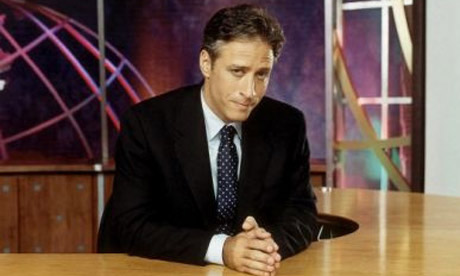
Sometimes I wish I could be Jon Stewart

Neil Reynolds, Toronto Globe and Mail columnist, former global warming denier and now, it seems, a mitigation skeptic, wrote on Friday:
Without heroic government intervention, [economist Richard Tol] says, climate change will probably cause damage equal to losing two years of economic growth [a few percent of income according to the abstract of Tol's paper] - co-incidentally the same damage caused by an average recession.
Neglecting the fact that Tol's paper, published by Bjorn Lomborg's Copenhagen Consensus Centre, omits the Stern Review from its Table 1. list of studies on the 'estimates of welfare loss due to climate change', and underestimates damage from climate change...
If there were a flood and 50 million people in Bangladesh perished, world 'wealth' would decrease less than 1 percent - they would mostly be poor people. Lomborg and Tol would then claim that we could make that up with a year or two of economic growth?!
I wish I were Jon Stewart so I could sit there in stunned silence, as only he can, and then say, "Yeah... flood... 50 million poor people die, then after a year or two of global economic growth we'd be all square again ... WTF".
Saturday, August 15, 2009
Parliament High?
Senior Liberal strategists are now referring to the Ignatieff OLO (Opposition Leader's Office) as “Parliament High” because of the legions of inexperienced young people who populate it.
Is this really a fair assessment? I hope not because the OLO is a Prime Minister's Office (PMO) in waiting and more and more in the last few decades the PMO functions like the Canadian federal government's executive branch (as opposed to the full cabinet).
Ms. Taber's article is worth responding to, I would think.
Don't underestimate young people!
Thursday, August 13, 2009
The NDP is making it hard for me to be sympathetic
The point was brought to my attention today very clearly here and here.
Sunday, August 9, 2009
What to do about the Poker Run?
For a little background, read this article in the Whig
and this TV news report and This editorial in the Whig
I've tried to propose an idea that I think could help make some progress. It's based on local greenhouse gas offsets and triple bottom line accounting: finding solutions with financial, environmental, and social benefits.
Dear Editor,
Several readers of the Whig-Standard have written about this past weekend's
Poker Run event.
I would like to take the discussion about the Poker Run, its greenhouse gas
emissions, and Kingston's vision to be Canada's most sustainable city, in a
different direction.
First, I would disagree with one of the letter writers. The planet is not
doing fine. Global warming is a real threat, especially to future
generations. The greenhouse gas emissions from the Poker Run impose a real
cost on the whole world by contributing to global warming.
On the other hand, the Poker Run contributes a lot to local economic
activity in the Kingston region.
I would suggest that if we, the City of Kingston, benefit so much from the
Poker Run, it is only fair that we assume the responsibility for its
greenhouse gas emissions. I would further suggest, therefore, that we, and
perhaps not the powerboaters, purchase high quality greenhouse gas offsets
that cause the reduction of the greenhouse gas emissions elsewhere, and
cancel the emissions from the Poker Run.
That elsewhere could be in Kingston itself. In fact, based on some
calculations that I have done, the total amount of greenhouse gas emissions
from the Poker Run boats is roughly comparable to the greenhouse gas
emissions coming from one year's venting of anaesthetic gases from surgeries
at Kingston's hospitals. Technology, from an Ontario company called
Blue-Zone, exists to recover and recycle these expensive chemicals, but it
costs a little money up front, and who can blame our hospitals for having a
hard time coming up with extra money to recover anaesthetic gases. So (and
this is the crucial point) if someone provided the funding to do that every
year, then emissions would be prevented that otherwise would continue. As an
aside, hospitals would actually benefit in the future from being able to
obtain anaesthetics at lower cost.
Perhaps there is a way for local merchants, people concerned about global
warming, Kingston hospitals, powerboating enthusiasts, an Ontario technology
startup, and Kingston's branding as a sustainable city to make a little
progress together?
Friday, July 31, 2009
If the New York Times is so sloppy...
Correction: July 22, 2009
An appraisal on Saturday about
If the New York Times can make so many errors of fact, many of which could have easily been checked, what does that say about the regular news where you are relying on the newspaper to tell you something new, a piece of information that isn't already stored somewhere for you to check against?
Liberals shouldn't have followed Conservatives on partisan ten percenters
Other Liberal bloggers have applauded this move, but I disagree.
The partisan ten percenters had been energizing and motivating Liberal party supporters and other voters. A lot of people were angry at these mailings, told us so, and I think we could have capitalized (were capitalizing!) on them to build up our own organization.
Instead, this is looking like out-of-control, pre-writ, partisan mud-slinging funded, unwillingly I am certain, by the tax-payer. It's not going to help us solve some of the structural problems with Canadian democracy like voters getting turned off by politics and disengaging from the political process. (problems that Conservatives are less concerned about, since it serves their interests)
My feeling is that Liberals are not going to realize a net profit by choosing this route. I can't see, for example, that it's going to help the Liberal party pick up members and supporters.
Saturday, July 25, 2009
Rex Murphy's gaffe today
Mr. Murphy failed to check measurements of global temperature before writing that, "things have gotten cool" and complaining that no meteorologists have spoken up about how solid the "theory of global warming" can be given that Toronto seems to be "having a Newfoundland summer".
Let's look at the actual measurements. The US National Oceanic and Atmospheric Administration's National Climate Data Center has data showing that this past June had the second highest globally averaged land and sea temperature ever recorded. How can that be given that those of us in the middle of North America have been experiencing a cool wet summer? Well, It turns out that other parts of the world - the north and eastern Pacific, north-western Atlantic, Africa, Southern Europe, and Siberia were much warmer than normal. Averaged over the globe, the relatively cooler interior of North America got canceled out and then some.
There has been no global cooling alert this summer because there hasn't been
any global cooling.
Friday, July 17, 2009
Cool here but globally the second warmest June ever recorded

The US National Oceanic and Atmospheric Administration's National Climate Data Center reports that this past June had the second highest globally averaged land and sea temperature ever recorded. Yet folks in many parts of Canada and the US experienced a cool and wet June.
This figure explains how it happened. It turns out that other parts of the world, the north and eastern Pacific, north-western Atlantic, Africa, Southern Europe, and Siberia were much warmer than normal. Averaged over the globe, the relatively cooler interior of North America got canceled out.
Of particular interest is the warmth of Siberia. That's where one of the feared tipping points could happen: melting permafrost could release large quantities of methane and carbon dioxide and accelerate global warming.
For more, read this post by Joe Romm
Saturday, July 4, 2009
Wrong but very useful: the efficient markets hypothesis

Personal finance tip to folks who have some money saved up: Don't throw the baby out with the bath water by completely dismissing the Efficient Markets Hypothesis (EMH). See the end of this post for what I mean in practice.
I cannot resist commenting on an article in today's Globe & Mail (Taking Stock, Brian Milner) entitled, "Sun finally sets on notion that markets are rational". Milner is reviewing a new book, by Justin Fox, whose cover appears in the figure. In summary, Milner writes that EMH, "has finally been buried under an avalanche of unforeseen calamities, uncontrolled greed and other seemingly irrational behaviours it couldn't possibly explain."
What's this all about? Well, the idea behind EMH is that you can't beat the market. Efficient means that the price of an asset that you observe in the market is all you know and you can't predict the future price. Why? Because if a stock or some other asset is under-priced, somebody would take advantage of that and buy it, pushing up the price until there was no longer any profit to be made. So the prices you observe in the market are the "right" prices in some sense. Economists have thought quite deeply and extensively about this idea.
Now, we also know in practice that this hypothesis is wrong. But it is nevertheless an extremely useful hypothesis in the sense of the physicist Wolfgang Pauli, who once famously ridiculed a theory by saying that it, "wasn't even wrong". Let me give you an example of why we know this hypothesis is wrong. As a trader I would often get customers who were not interested in maximizing their profits solely in the financial markets. For example, they would tell me to buy X shares of a stock now. I might tell them if they took a few hours to work their order they could get a better price. They would come back to me and say, well, my staff is busy and they need to work on other important things, so I don't care if you buy X shares and drive up the price somewhat, just fill my order now, please. After I fill the customer's order, I'm 90% certain that the share price is going fall back down, contrary to the efficient market hypothesis.
So why is the EMH wrong but still useful here?
The answer is that anybody else looking at the market for the stock cannot know that the stock is going to rise or fall. They don't know if I'm finished with my order, or if I have a lot more shares to buy. Unless they can deduce something about what I am doing, the market appears to them to be efficient, meaning there is no profit, on average, to made by betting on the direction that the stock price moves. Furthermore, EMH is useful because it implies that you should always have a healthy respect for the market and the prices you observe in a freely trading, liquid market. It leads to the following rules, which I think of as the trader's practical version of the efficient market hypothesis (applicable to liquid markets):
And a corollary,
So, what practical advice can I give, especially to all those people who have some money saved up but have better things to do with their lives than worry about their investments? Well, I'm pretty confident (i.e. I would tell my mother to do this) that markets are still efficient enough to say, don't pay somebody to pick particular stocks, bonds or other investments. Invest passively in index funds that have low management fees. Think twice before spending a lot of your own time on stock-picking, market-timing or trading instead of on something else that might be more valuable to you and other people in your life.
Sunday, June 28, 2009
Toronto Island, now and 25 years ago


The Globe and Mail's Report on Business 25th anniversary issue this past Saturday contained a two page spread by John Daly comparing photos by photographer Elizabeth Jones of downtown Toronto on May 21, 2009 and May 21, 1984.
Here are the photos:
2009 on top, 1984 below. The article pointed out all the new buildings that have gone up. Toronto sure has changed. But look at Toronto Island. Notice how much greener the trees are compared to the grass in 2009 vs. 1984. Nature has changed too.
These pictures don't prove anything about global warming, but it is interesting to note that the foliage is quite a bit more advanced in 2009 compared to 1984. This colour change is amplified by the fact that it's spring and the colour of trees changes rapidly during May. If it's a couple of degrees warmer, on average, then everything grows something like ten days earlier. Look carefully at nature and you'll be able to pick out the signs of global warming.
And yes, in case you were wondering, according to the National Climate Data and Information Archive, in Toronto, March, April and May 2009 were on average about 3 degrees warmer than those respective months in 1984.
Tuesday, May 19, 2009
US fuel and emissions standards
Yes, consumers will pay billions more for more fuel efficient cars, but that's billions that will go into advanced automobile manufacturing, and many more billions of petro-dollars staying in the pockets of consumers and not going to overseas powers. Canada will benefit too.
There are a few good things coming out of this recession...
Monday, May 18, 2009
Another chorus
First, Tom Axworthy writing in the Toronto Star can be summarized by its opening lines:
Stéphane Dion announced at the recent Liberal convention in Vancouver that he would be staying in politics. This is a good thing because a future Liberal government will have great need of his intelligence, commitment and stubbornness in dealing with climate change.
Elgie, Boyd, and Waddell, writing in the Globe and Mail (How a B.C. carbon tax rose from Dion's ashes) gave six lessons from the BC and Federal election results after summarizing things:
Although widely regarded - by both environmentalists and economists - as an essential tool in growing green jobs and combating climate change, many Canadian politicians perceived carbon taxes as toxic after Stéphane Dion's defeat. The results of this week's B.C. election should help put that notion to rest.
Finally Paul Berton writing in the Ottawa Sun(!) The True Costs of Car Travel wrote what many experts know all too well:
Not only should we not reduce gasoline taxes, it is inevitable, though undoubtedly unpalatable politically, that they will rise in the future to better reflect reality and the true costs of car travel [road building and maintenance, health and pollution, accidents, traffic congestion, insurance, urban sprawl]
Sunday, May 17, 2009
What could be more Canadian...
Try a FREE small Tim Hortons Iced Coffee!
Drop by your local participating Tim Hortons store on May 21, 2009, and enjoy a new small Iced Coffee for FREE!*
It’s a creamy, sweet blend of Tim Hortons coffee on ice. It’s a refreshing way to enjoy your Tim Hortons coffee!
*No purchase necessary. Limit one small Iced Coffee per customer. Offer valid in Canada only, at participating stores.
What could be more Canadian than Tim Horton's?
Being willing to stand in line at Tim Horton's. Go Michael!
Tuesday, April 21, 2009
Stephane Dion's Private Member's Motion
Stéphane is forging ahead and introducing a private member's motion on May 6 as follows:
That in the opinion of the House, the government should increase its support of Canada's renewable energy sector, allow our country to participate in the worldwide effort to develop renewable energy sources and enlist Canada as a full member of the International Renewable Energy Association (IRENA).
The last Conservative budget was very disappointing in this respect because it did not increase the total funding pot for the federal EcoEnergy for Renewable Power Program. The current funding pot is all spoken for, so that no new renewable energy developments will be stimulated by this program. It's a lost opportunity that, by contrast, the new U.S. administration is taking up enthusiastically.
Bravo to Stéphane Dion for continuing to push for action on energy security, sustainable economic development, and global heating.
Sunday, January 25, 2009
On borrowing from the Bank of Canada
The letter, "Borrow from Bank of Canada", January 24, 2009, propagates a misconception that there is a costless way to pay for government spending by borrowing from the Bank of Canada (BoC). I would like to point out some problems with the author's reasoning.
To begin with he writes, "Banks must be finding it hard to contain their glee at the propect of the federal government running deficits that could amount to $100 billion..." (in anticipation of all the interest income). There are two problems: first, banks usually are not the ones that lend to the federal government. The money comes from investors such as people saving for
retirement through pension funds, mutual funds, and life insurance policies. Banks are in the business of making riskier and higher yielding loans such as to businesses, entrepreneurs, and home buyers. Second, investors holding government bonds won't be gleeful. On the contrary, when the federal government sells bonds to finance its spending, that extra supply will push down the value of investors' bonds.
The author is correct in saying that financing government spending by borrowing directly from the BoC is like telling the BoC to print money and give it to the government. Printing $100 billion certainly could be inflationary. As the author suggests, to prevent inflation, the BoC could force commercial banks to put an extra $100 billion in reserve but that would be $100 billion no longer available to finance the investment and job creation that we sorely need now. It would be like slamming the brakes on the economy. The BoC could raise interest rates to prevent inflation, but that would have the same effect of slowing down the economy.
On the other hand the BoC could be instructed to stand back and let the Loonie inflate. That is a valid policy choice, but we should be clear to Canadians what is really being proposed in that case. People on fixed incomes and indeed the whole economy would have a certain price to pay. Also, the independence of the Bank of Canada from political influence would be threatened.
The unsurprising truth is, there is no free lunch. But it's also true that the Government of Canada can borrow money at the lowest possible interest rate on Canadian dollars because there is no risk of default - it could always print the dollars needed to repay those loans. The cost of borrowing money is not the issue. The issue is, in this time of economic crisis, whether our federal government chooses the right things in which to invest that money.
Original Article:
Borrow from Bank of Canada
Banks must be finding it hard to contain their glee at the prospect of the federal government running deficits that could amount to $100 billion over the next few years. Even at 3% interest, that would amount to a perpetual income of $3 billion and a perpetual charge to the government. This interest would be added to the $63 billion we are already paying every year on the debts of our three levels of government.
The sad part is that the added cost of this interest is entirely unnecessary. The federal government could borrow money interest-free from the Bank of Canada. The government owns the Bank of Canada, so profit from the bank is returned to the government as a dividend.
When the government borrows from a bank, the bank creates the money it lends simply by entering a credit in the account the bank has set up for the government. The government then draws upon this credit and pays whatever interest is charged. When it borrows from commercial banks, the interest charged remains with the bank. When it borrows from the Bank of Canada, the interest charged eventually returns to the government minus a tiny amount for the cost of administering this process.
So why does the government borrow from private sources? Ask your MP. The answer, if you are not ignored, will likely be that doing so would cause inflation by putting too much money in circulation. To counteract this, the government must reinstate the statutory reserves that were disring the Brian Mulroney government. This would require the commercial banks to put money in reserve to reduce the amount in circulation. Richard Priestman Kingston
Monday, January 5, 2009
A new year's chorus calling for a revenue neutral carbon tax
Or just an effort to put a good idea in front of Barack Obama?
Dec. 26, New York Times lead editorial: A call for a revenue neutral gas tax
Dec. 27, New York Times Op-Ed: Republicans Bob Inglis and (economist) Arthur Laffer call for a revenue neutral carbon tax, writing, "We need to impose a tax on the thing we want less of (carbon dioxide) and reduce taxes on the things we want more of (income and jobs)."
Dec. 27th Thomas Friedman calls on Obama to implement a gas tax: A gasoline tax “is not just win-win; it’s win, win, win, win, win,” says the Johns Hopkins author and foreign policy specialist Michael Mandelbaum. “A gasoline tax would do more for American prosperity and strength than any other measure Obama could propose.”
Dec. 29, 2008: NASA's James Hansen calls on Obama to implement a revenue neutral carbon tax at Guardian.co.uk
Jan 1, 2009: Financial Times of London uses its first issue of the new year to call on Obama to implement a revenue-neutral carbon tax.
Jan 1, 2009: Whoa, so does the Boston Globe in its New Year's wishes.
Jan 5, 2009: neo-conservative journal, The Weekly Standard cover story by Charles Krauthammer calling for a revenue-neutral gas tax.