There is an article by Canwest News reporter, Mike De Souza today about a newly released document from the Canadian federal government (Environment Canada)
A dramatic reduction in Canadian media coverage of climate change science issues is the result of the Harper government introducing new rules in 2007 to control interviews by Environment Canada scientists with journalists,
Scientists have noticed a major reduction in the number of requests, particularly from high profile media, who often have same-day deadlines," said the Environment Canada document. "Media coverage of climate change science, our most high-profile issue, has been reduced by over 80 per cent."
The Harper government's new policy has required senior scientists to get permission before communicating to the press. Because the press is usually working under short term deadlines, this policy practically cuts off a source of information for them. The result - less media coverage of issues like climate change, and less political pressure for action.
This is unacceptable. Scientists must be free to talk about science. The government could put restrictions on what its employees say about policy, but it should not be controlling the flow of information about what is going on in the natural world.
Maybe the politicians on the Conservative side of the House don't understand this principle. Are there any scientists sitting over there at all?
Showing posts with label climate change. Show all posts
Showing posts with label climate change. Show all posts
Monday, March 15, 2010



Monday, August 24, 2009
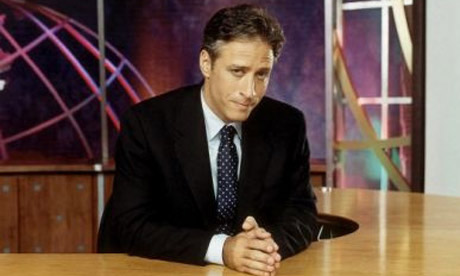
Sometimes I wish I could be Jon Stewart
Neil Reynolds, Toronto Globe and Mail columnist, former global warming denier and now, it seems, a mitigation skeptic, wrote on Friday:
Without heroic government intervention, [economist Richard Tol] says, climate change will probably cause damage equal to losing two years of economic growth [a few percent of income according to the abstract of Tol's paper] - co-incidentally the same damage caused by an average recession.
Neglecting the fact that Tol's paper, published by Bjorn Lomborg's Copenhagen Consensus Centre, omits the Stern Review from its Table 1. list of studies on the 'estimates of welfare loss due to climate change', and underestimates damage from climate change...
If there were a flood and 50 million people in Bangladesh perished, world 'wealth' would decrease less than 1 percent - they would mostly be poor people. Lomborg and Tol would then claim that we could make that up with a year or two of economic growth?!
I wish I were Jon Stewart so I could sit there in stunned silence, as only he can, and then say, "Yeah... flood... 50 million poor people die, then after a year or two of global economic growth we'd be all square again ... WTF".
Monday, October 27, 2008
0.7% of GDP development aid target = revenue from a $30/tonne carbon tax, numerically and morally
At the recent Carbon Pricing and Environmental Federalism conference in Kingston, Ontario, one thing that was brought up by a couple of speakers (one of them was Matthew Bramley of the Pembina Institute) was the idea that taxes on greenhouse gas emissions, "carbon taxes", are actually a "recovered subsidy", and that, as a consequence, one could argue that it was more fair for the federal government to collect this tax (as opposed to provincial governments).
Let me explain this a bit before getting to my idea. Greenhouse gases are causing climate change, and that will be bad for everybody. Right now, people get to emit greenhouse gases (from burning fossil fuels) for free. But it's really not free because people in the future that will be burdened by climate change will pay the price. In effect, those people are giving a subsidy to the people who pollute for free today.
Money collected from a tax on fossil fuels would recover some of this subsidy. Who should get the proceeds? Well everybody benefits from reduced greenhouse gases, and the federal government would seem to have a better claim to represent "everybody" than individual provincial governments. Therefore, from this point of view it makes more sense that the federal government deserves the money.
Now to my point. Why stop there? We know that people who will really pay the price for climate change are the poor who live (or could have lived) in certain developing countries in the future. Aren't they the ones who are morally entitled to the proceeds of our carbon tax (in whatever form it is implemented)?
If you agree with my point then consider this: a $30/tonne tax on CO2, as proposed by the third year of Stephane Dion's Green Shift plan, would generate about $11b in revenue. That's coincidentally about 0.7% of Canada's $1.6 trillion GDP. Perhaps we should be considering fully funding Lester Pearson's (and the U.N.'s) suggested international development aid target using a $30/tonne carbon tax, and concentrating that aid on development that will prepare future generations to deal with climate change. What a great way to try to settle our debts and respect intergenerational equity.
Sunday, August 3, 2008
You want to avoid having Climate Cops?
There was an article in this past weekend's National Post entitled, "Children enlisted as 'Climate Cops', U. K. utility ad campaign raises Orwellian fears". I won't comment here on whether or not the reaction to a U.K. utility's climate change and energy conservation campaign has been blown out of proportion. But I will say this to readers of the National Post (especially to those who are principled conservatives): if you don't want the government telling you how to live, if you don't want your friends and neighbours looking over your shoulder and checking your energy consumption habits, if you don't want the problems of climate change and fossil fuel dependence being turned over to the 'Climate Police', then support the implementation of a carbon tax. For conservatives who like less government, the best way to deal with climate change is to tilt the playing field, and eliminate the current, unfair advantage that burning fossil fuels enjoys, that of being able to pollute for free. People will then be 'free to choose' (C'mon C's! Put a smile on Milton Friedman's face. Join your economists who support a carbon tax!) how to respond to this tilt - change driving habits, use less hot water, conserve electricity, heat with wood, insulate, or whatever.
Tuesday, May 1, 2007
Letter to the Editor of the Toronto Sun
Re: Peter Worthington's column, "Weather Watch", April 25, 2007
Freeman Dyson has indeed said that climate models can't be trusted to predict the effects of global warming. While Mr. Dyson is not a climate researcher, I'll concede that there's uncertainty in the models. But that uncertainty can work both ways. Consider the news today that Artic sea ice has been measured to be melting three times faster than average prediction of 18 computer models used by the Intergovernmental Panel on Climate Change. Instead of doubting global warming we should be cautious and conservative by putting the burden of proof on those who say that it's okay to continue "business as usual".
Freeman Dyson has indeed said that climate models can't be trusted to predict the effects of global warming. While Mr. Dyson is not a climate researcher, I'll concede that there's uncertainty in the models. But that uncertainty can work both ways. Consider the news today that Artic sea ice has been measured to be melting three times faster than average prediction of 18 computer models used by the Intergovernmental Panel on Climate Change. Instead of doubting global warming we should be cautious and conservative by putting the burden of proof on those who say that it's okay to continue "business as usual".
Saturday, March 10, 2007
Replying to a Climate Change denier
Here is an opinion piece from The Whig-Standard, Kingston, Ontario's local newspaper, followed by my reply to the paper. I can't believe the editorial board allowed the piece to be published!
Some inconvenient questions about global climate change
Opinion by George Luck
Monday, March 05, 2007 -
Environmental Stories - OPINION
The “cause du jour” for this year seems to be the dreaded “man-made global warming.” You cannot turn on a TV or read a news paper without being bombarded with the most dire forecasts of doom and gloom. Isn’t it funny that we rarely hear from those who call for caution in this headlong rush to Kyoto? Isn’t it odd that we are urged to accept that any scientist who disagrees with the concept of imminent man-made global catastrophe is in the pocket of big oil? Yet nobody seems to be asking where the global alarmists are getting their funding and what it might mean to their findings.
Before we all jump on the Kyoto bandwagon, there are some serious questions that need to be asked about “man-made global warming.” Unfortunately, any brave academic who dares to question prevailing thought on the subject is quickly shouted down. In fact, there are several instances of outright dismissal for this heinous crime. But the questions remain.
Here are some real inconvenient truths that the global warming alarmists do not want to address:
• It is an undisputed fact that water vapour is the main culprit in any supposed global warming. In fact, it is calculated that up to 95 per cent of the warming effect is due to water vapour, with the dreaded CO2 responsible for as little as .5 per cent. And yet carbon dioxide is held out as the “great Satan.”
• Since the 1940s, the number of hurricane landfalls on the coastline of the United States has actually decreased, from 23 in that decade to 14 in the period 1990 -2000. The strength of these hurricanes has actually decreased, not increased. The supporters of the “global warming is causing more and stronger storms” school of thought
often refer to the hurricane that devastated the Gulf Coast as a Category 5 storm. In fact, the National Oceanic and Atmospheric Administration reported this storm as a strong Category 3 hurricane.
• Supporters of the global warming theory often refer to the loss of ice and snow from Mount Kilimanjaro in Africa as more proof of global warming. In fact, the snow and ice have been receding since the late 1800s. It is now postulated that this may be due to the deforestation of the lands around the mountain, which prevents the formerly moist winds from creating snow at the top.
• There are about 167,000 glaciers on our planet, and only 79 of them have actually been studied with any real
accuracy. Now math is not my forte, but that means that “experts” are claiming that the glaciers are melting based on a sampling of .0473 per cent of the total. That is not scientific research. That is not even a good guess. To say that the glaciers are melting based on a .0473-per-cent sampling is, if not misleading, then downright untruthful.
• If this were CO2-driven warming, it should have started in 1940 and risen strongly from there. In fact, warming started in 1850 and rose sharply until 1940, then decreased for 35 years. The total warming since measurements have been attempted is thought to be about 0.6 degrees Centigrade. At least half of the estimated temperature increment occurred before 1950, prior to significant change in atmospheric carbon dioxide levels.
• Greenland got its name from the verdant pastures that attracted the Norse settlers under Eric the Red in 986. They carried on their normal way of life (based on cattle, grain, hay and herring) for 300 years until the time of the Little Ice Age, when they were driven off by the encroaching ice and the Inuit took over. The ice and the Inuit are still there.
And, of course, the entire man- made global warming issue is based on computer-generated models that in themselves are based on so many assumptions that their accuracy must be questioned.
Perhaps most shocking of all is the summary issued recently by the Intergovernmental Panel on Climate Change. Even this body, which is largely responsible for the hysteria over the global warming issue, has backed away from many of its previously outrageous claims about rising sea levels, global temperature increases and destruction of sea ice, to name a few. And, worst of all, the actual
report on global warming, which has not been released yet, is being edited to agree with this clearly political document. But then, should we expect anything less from the United Nations “experts” who have a vested interest in ensuring that their funding remains intact?
Probably the most important point to be made here is that for every report, speech or movie shrilly screaming about the impending doom to be caused by “man-made global warming,” there is an equal number of scientists, reports, speeches and movies that claim that the “man-made global warming” issue is a dangerous charade. (An interesting question is, why does the press not give equal time to these sources?) So before we spend billions of dollars and probably beggar the economies of the West (but not China and India, which did not sign the Kyoto Protocol) we should demand a fair and equal hearing of all the facts.
Of course, this column probably ends my chances of winning the Nobel Peace Prize, but if that is what it takes to make people think for themselves, then so be it.
George Luck is a member of the Whig-Standard’s Community Editorial Board. He lives in Lansdowne.
Here is my reply which, unfortunately, did not get published:
The “Cause du Jour” is a Well Considered Cause
A response to the column on the environment by Mr. George Luck entitled, “Some inconvenient questions about global climate change”, The
I am, by nature, a cautious person. So I sympathize with George Luck when he wishes to be cautious about accepting the danger posed by climate change. But in this case Mr. Luck is wrong – not only wrong in his facts and arguments, but erring on the wrong side of caution.
Let us consider his points one by one.
- Why are we being ‘bombarded’ by reports in the media about climate change? I think the fact is that opposition to the reality of climate change has fallen apart in the last few years. From Evangelical Christians to the Conservative Party of Canada, more and more groups have joined the voices of those that accept that something needs to be done to tackle this real and serious problem.
- Is water vapour is responsible for most of the global warming? Water vapour does help trap heat but when there is a lot of water vapour it is easily removed from the atmosphere. It rains. Human activities aren’t increasing the global concentrations of water vapour in the atmosphere. But when extra carbon dioxide enters the atmosphere, it takes a century or so to remove it. In the meantime, the carbon dioxide heats up the earth.
- Has the number of hurricanes decreased since the 1940s? The number of named tropical storms in the
- Haven’t only a few glaciers been studied “with any real accuracy”? Let us be very generous and accept Mr. Luck’s figure that only 79 of 167,000 glaciers have been studied with any real accuracy. Are glaciers in retreat or not? Think of it this way. Suppose I am blindfolded and presented with a big, big bowl of Smarties. I’m told that either 90% are red Smarties and 10% are green Smarties, or there an equal mix of red and green Smarties. I pick 79 Smarties out of this big, big bowl, then take off my blindfold and look at the Smarties I picked out. I think the reader would agree that I could probably tell whether 90% of the Smarties were red or not. It doesn’t matter at all that I picked them out of a big, big bowl. What really matters is that 79 is a good sized sample of Smarties. We can tell from 79 glaciers whether glaciers are retreating or not. In fact more than that have been studied.
- Did warming start in 1850 and decrease for 35 years after 1940? One must look at a bigger picture. Global temperatures have indeed been rising since global industrialization in the nineteenth century and this rise sticks out clearly in a graph of global temperatures, say, over the last 1000 years, no accident in retrospect. Pointing to the decrease in temperature from 1940 to 1975 is rather like pointing to the great depression and wondering whether the world economy has really been growing over the last couple of centuries.
- Didn’t
- Couldn’t the computer models be inaccurate? Global warming and carbon dioxide concentrations have been measured. You may use computer models to project into the future, but you don’t use them to measure the temperature and carbon dioxide concentration today.
- Isn’t the final IPCC report being edited before release? The latest IPCC report, like its predecessors, will be a conservative document that only makes claims for which a broad scientific consensus has been reached. If anything its statements are written to underestimate the strength of conclusions on climate change.
- Are there an equal number of scientists claiming that, “man-made global warming” is a dangerous charade? In plain fact, no. UC San Diego history of science professor Naomi Oreskes looked at hundreds of peer-reviewed papers published between 1993 and 2003. They all supported the reality of man-made global warming and none denied it. If we don’t trust that study, then I would propose to Mr. Luck that he find some scientists at Queen’s who are willing to sign their name to a statement that, “the ‘man-made global warming’ issue is a dangerous charade”. For every name that I see, I’ll go and get ten Queen’s scientists to say that it’s not a dangerous charade.
My final point is that Mr. Luck is not being cautious. Carbon Dioxide levels in the atmosphere are rising far above what they have ever been during the time that human beings have been on this planet. If you want to be cautious, Mr. Luck, put the burden of proof on those who say, “Don’t worry”.
Subscribe to:
Posts (Atom)


